Hamburger Meat Recipes Too Irresistible to Miss
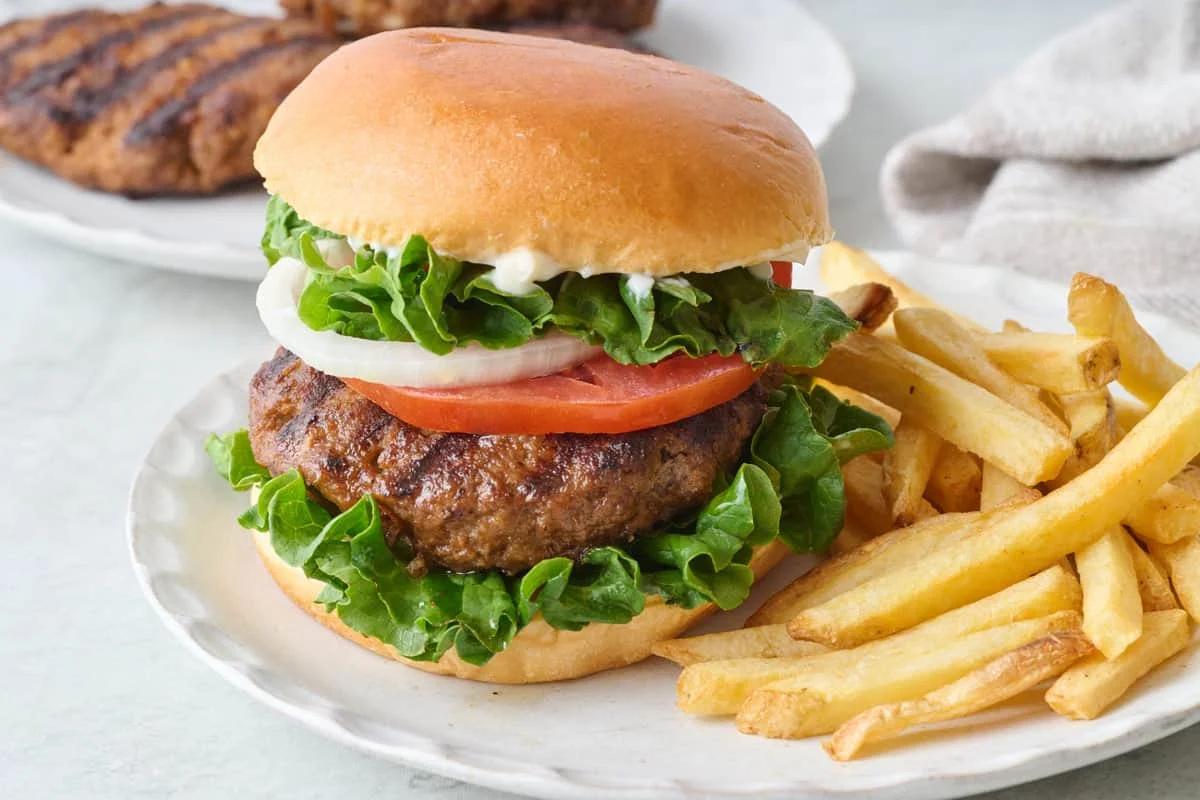
Making a hamburger starts with fresh ground beef mixed with a simple bread crumb mixture to form a patty that can be thick or thin depending on your preference. This recipe is one of the best, most all-purpose methods I’ve tried, delivering juicy, delicious, homemade hamburgers in less than 30 minut .
On a warm summer evening, I love grilling perfect patties on the grill or cooking them on the stovetop, then placing them on ciabatta, Kaiser, or potato rolls with your favorite condiments. These easy, must-make burgers turn any next cookout into a hit, and the mixture ensures every burger is ready to enjoy, whether for a casual dinner or a fun gathering.
es.
Ingredients for 1 Burger
- Ground beef (minced) about 110–150 g
- 1 small pinch of salt & black pepper (or to taste)
- (Optional) 1–2 teaspoons finely chopped onion or garlic for extra flavour
- (Optional) 1–2 tablespoons breadcrumbs (or small bread crumb) if you want the patty to hold together well
- (Optional) 1 small egg or part of one if adding binder (though for just 1 burger, you might skip egg)
- 1 burger bun
- Toppings & condiments (as desired): lettuce, tomato slice, onion slice, cheese slice, ketchup / mayo / sauce, etc.
Step-by-Step Instructions
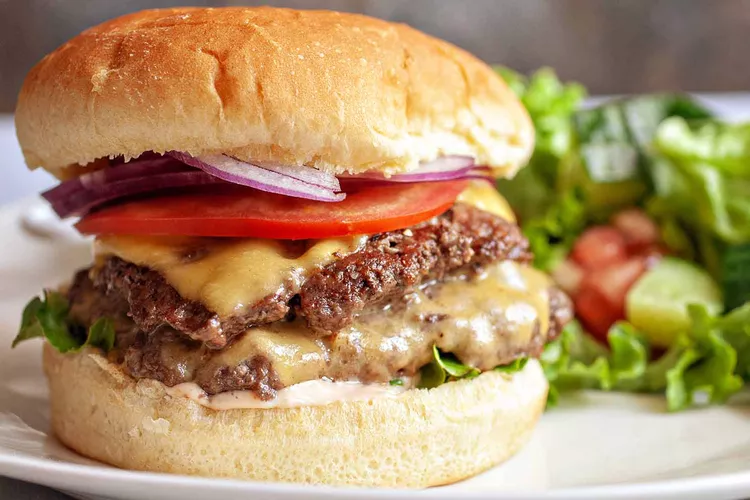
Mix the ingredients
Gently combine ground beef, chopped onion (if using), egg (if using), salt, pepper, and breadcrumbs (if using) until just uniform. Tip: use your hands and stop as soon as ingredients look evenly mixed — overworking develops gluten in the small amount of flour/protein and makes the burger dense or tough. If you skip egg/breadcrumbs, be extra gentle because there’s less binder. If the mix feels too wet, chill it 10–15 minutes or add a tablespoon of breadcrumbs; if too dry, a splash of milk or an extra egg will help.
Divide and shape patties
Portion into 4 (or your desired number) equal pieces, roll gently into balls, then flatten into patties about ½ inch (1–1.5 cm) thick and slightly larger than the buns. Wetting your hands prevents sticking and helps produce smooth edges. Don’t over-compact — press just enough to hold the shape; compacting tight makes the burger dense. Make them slightly larger than the bun because they shrink while cooking.
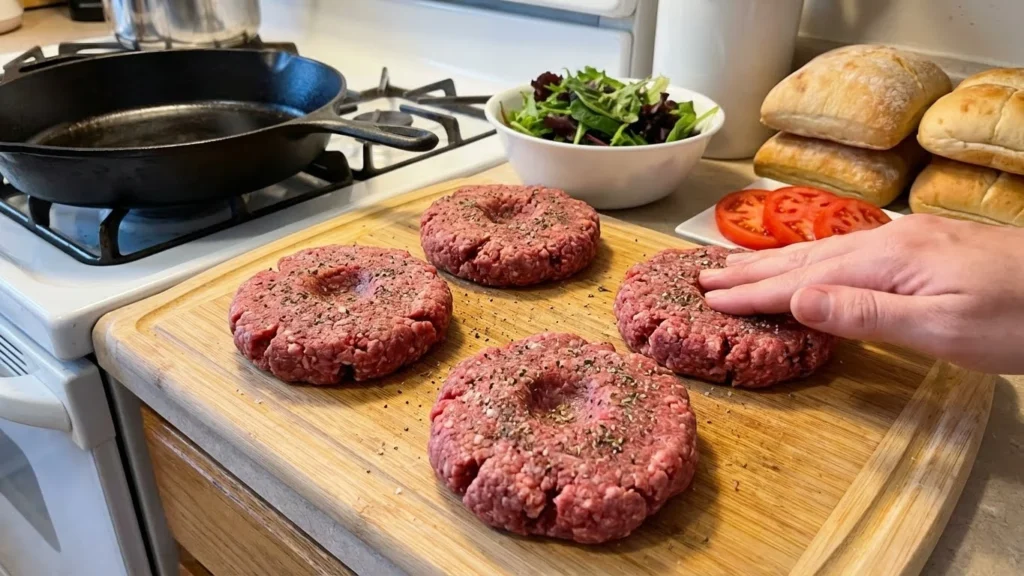
Make a small dent in the center
Press a shallow indentation (about ¼ inch) in the center of each patty with your thumb. Why it matters: as meat heats it contracts and can bulge in the middle, producing a domed patty that cooks unevenly and can look odd in a burger. The dent compensates for shrinkage so the patty stays flatter. Don’t press too deep — you want a shallow hollow, not a hole through the patty.
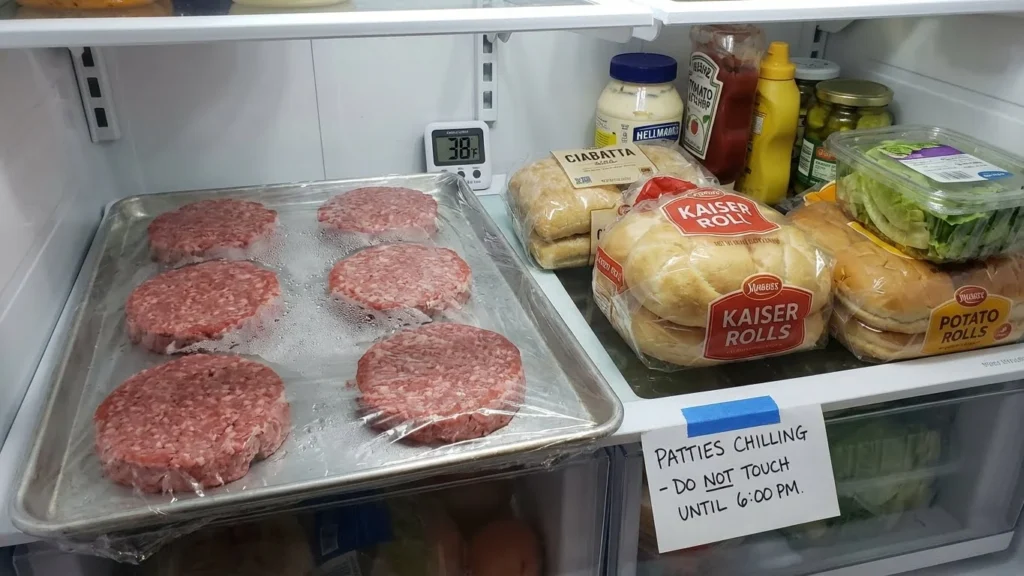
Chill the patties (optional but recommended) & preheat the pan
Place shaped patties on a plate, cover, and refrigerate for 20–30 minutes. Chilling firms the fat and binders so the patties hold together on the grill/pan and produce a better crust. While chilling (or right after), preheat a heavy skillet or grill to medium-high — you want it hot enough that a patty sizzles immediately for good searing. Add a light film of oil to the surface to prevent sticking. If using a charcoal grill, wait until coals are ashed and hot; on a gas grill set a medium-high flame.
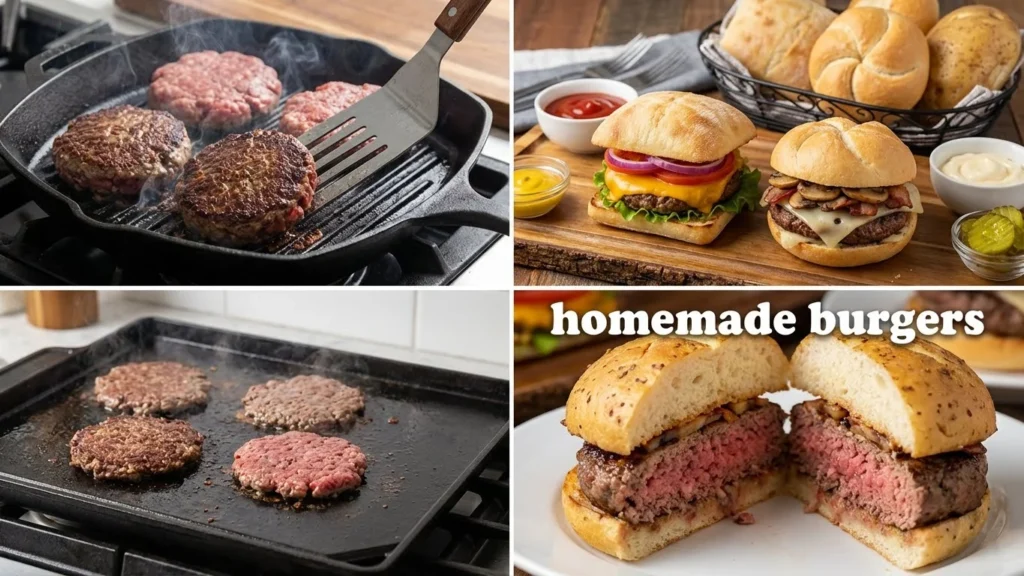
Cook — sear first, then finish (don’t press)
Place patties on the hot surface and cook undisturbed for 4–5 minutes to develop a brown crust (Maillard reaction), then flip once and cook the other side 3–5 minutes depending on thickness and desired doneness. Avoid pressing with the spatula — pressing squeezes juices out and dries the burger. If you want cheese, add slices in the final minute and cover briefly to melt. For food safety, ground beef should reach 160°F (71°C) for well-done; use an instant-read thermometer to check if uncertain.
Toast buns, rest, and assemble
Toast the cut sides of the buns face-down on the pan or grill for about 30–60 seconds until lightly browned — this adds flavor and prevents soggy buns. After cooking, let patties rest 2–3 minutes so juices redistribute and don’t spill out when bitten. Assemble: bottom bun → patty (cheese side up if melted) → toppings (lettuce, tomato, onion) and sauces → top bun. Serve immediately for best texture and juiciness.
- Avoid pressing down on patties while cooking pressing squeezes out juices and dries the burger.
Toast the buns — prep & method
Slice buns just before toasting so they don’t dry out. Place cut-side down on the hot pan or grill for about 30–60 seconds until they’re lightly browned and fragrant; on a very hot surface it can be just 20–30 seconds. Watch closely — they go from perfect to burnt fast. A light butter or mayo spread before toasting gives extra flavor and a golden crust.
When to toast — timing with the patties
Toast while patties are finishing or right before serving so buns are warm and crisp. If you toast too early they’ll cool and lose crunch; too late and you delay plating. Aim to put buns on in the last minute of cooking the burgers (or while patties rest) so everything is hot at assembly.
Rest the patties — why and how long
After cooking, transfer patties to a plate and let them rest 2–3 minutes loosely tented with foil. Resting lets juices redistribute from the center to the outer meat so they don’t gush out when you bite. Don’t stack patties or press them — that squeezes juices back out.
Manage cheese & temperature during rest
If adding cheese, place it on the hot patty in the last 30–60 seconds of cooking and briefly cover the pan so it melts evenly. If you forgot, you can still place cheese on the patty during the rest — retained heat will finish melting. Keep patties loosely covered while resting to retain warmth without steaming the bun.
Estimated Nutrition per Full Burger
| Calories | ~ 400 kcal |
| Protein | ~ 20–22 g |
| Total Fat | ~ 20–21 g (including saturated & unsaturated fat) |
| Carbohydrates | ~ 30–32 g (mostly from the bun + sauces/condiments) |
| Sodium | ~ 600–650 mg (varies a lot depending on salt & sauces) |
| Cholesterol | ~ 55–60 mg (varies depending on meat & fat content) |
Storage Instructions for Hamburger Meat
Keep raw ground beef refrigerated at 40 °F (≈ 4 °C) or below and use it within 1–2 days otherwise freeze it.
If you freeze the meat, wrap it tightly in heavy‑duty plastic wrap, freezer‑safe bags, or foil to avoid freezer burn.
Once you cook the burger meat, store any leftovers in a sealed container in the fridge and use within 3–4 days.
Always avoid leaving raw or cooked meat out at room temperature for more than 2 hours (or 1 hour if it’s hot outside).
Conclusion
A properly stored and well‑cooked hamburger delivers great taste and keeps you safe. Store raw meat cold, cook thoroughly, and refrigerate any leftovers — then you can enjoy juicy, flavorful burgers without worry.